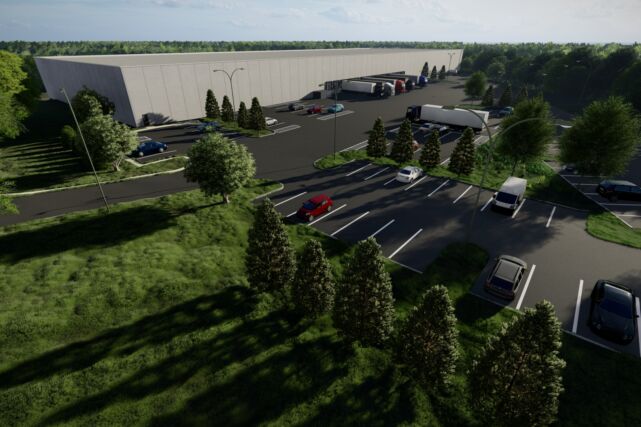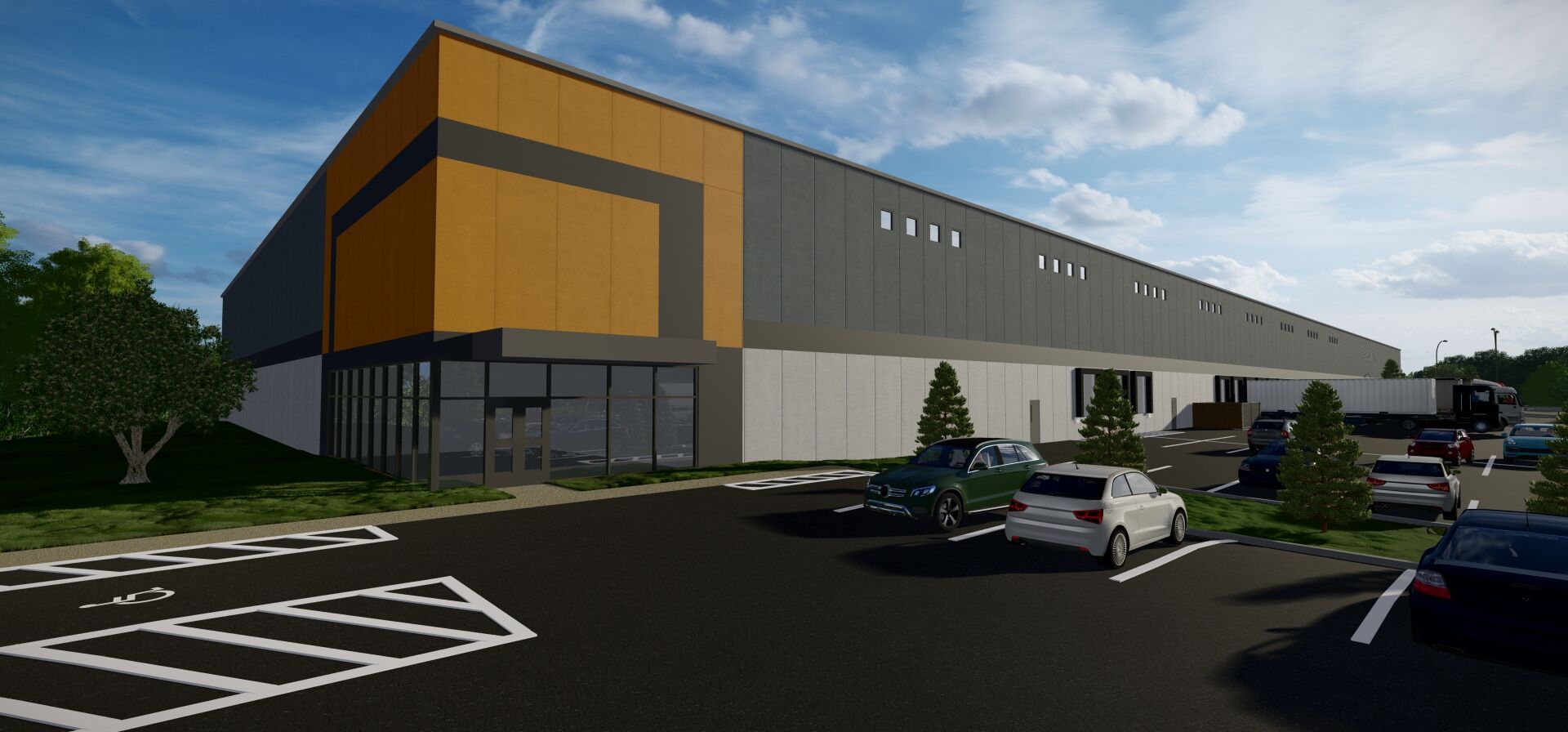
This 117,000 sf steel and precast concrete panel warehouse is located on 13 acres of industrial development in Denver, PA.
Careful planning and consideration had to be taken regarding sitework, which required 68,000 cubic yards of excess fill. The site had poorly compacted soil and required the installation of 1,048 aggregate piers, which are columns of compacted stone installed in groups to increase bearing pressure and mitigate settlement under structural footings. Almost three miles of these piers were drilled and rammed into the dirt. The site pad was completed over the summer of 2022.
The building features 122 precast concrete panels measuring up to 13’x43’ that were delivered and erected onsite in just under two weeks. The speed of construction by using these panels, along with their material properties such as thermal insulation and fire resistance, make them an excellent choice for efficient project completion.
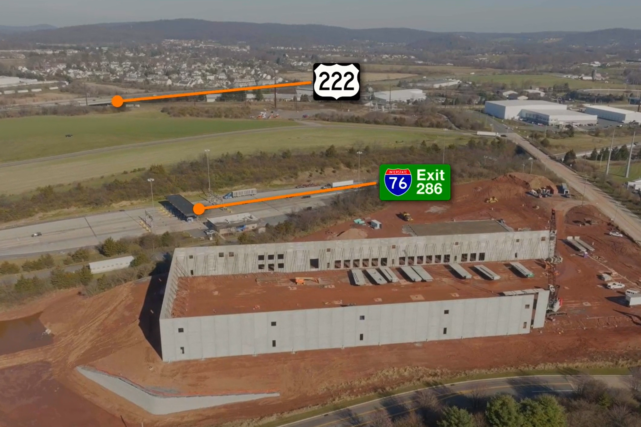
Located just off of the Pennsylvania Turnpike and US Route 222, the distribution warehouse is within only two hours of most major airports, railroads, and shipping ports on the east coast. The project is scheduled for completion in May 2023.